
Uncategorized
What Is Formaldehyde in Paint? Is It Harmful? Why Choose Formaldehyde-Free Paint?
When choosing coatings for wood, interiors, or living spaces, color and durability are usually the first factors considered. However, there is one important factor that is often overlooked: formaldehyde.
Especially formaldehyde in paints and interior materials.
What Is Formaldehyde? Is Formaldehyde Toxic? Why can some products cause an unpleasant odor in newly furnished spaces? And how can you choose a safer coating solution for the people who use the space?
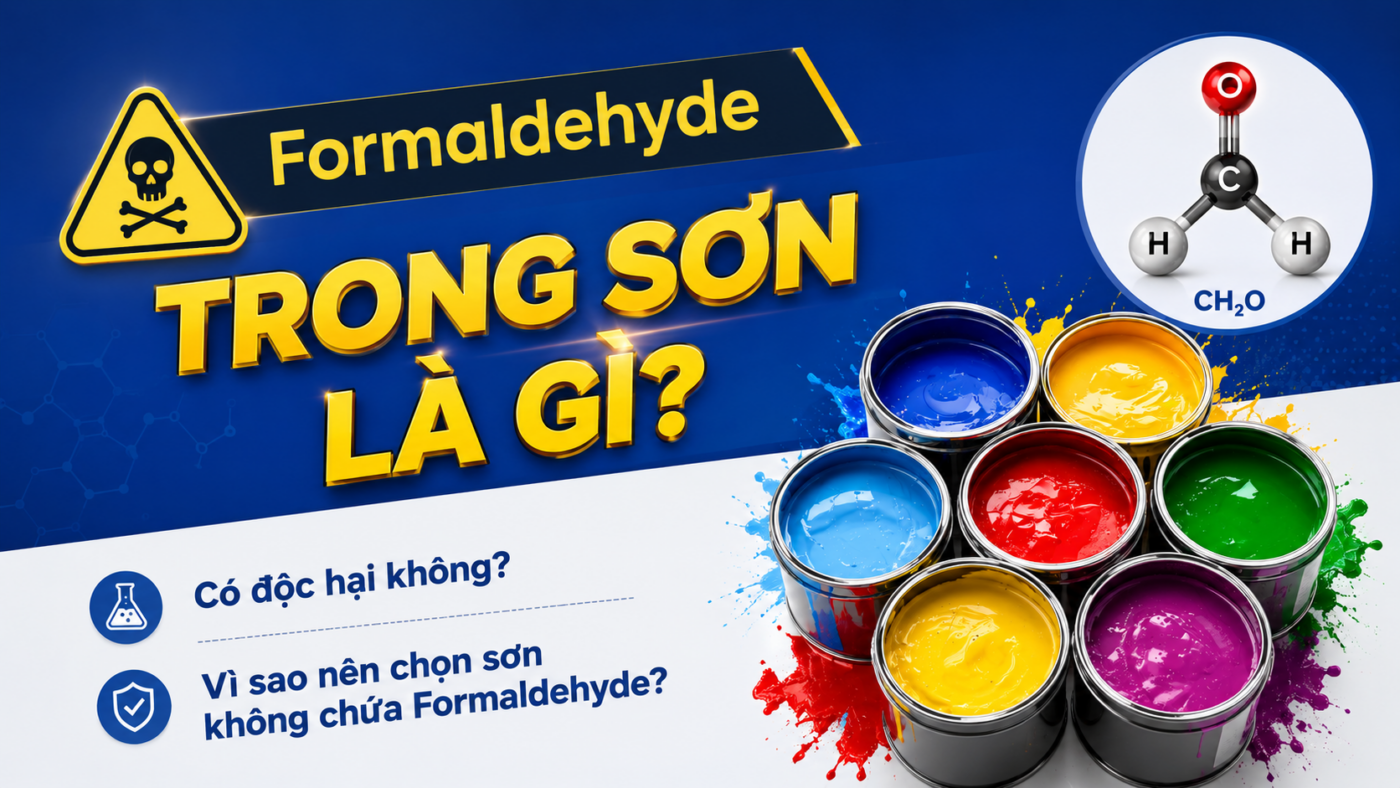
What is formaldehyde?
Formaldehyde has the chemical formula CH₂O. It is a volatile organic compound (VOC) that commonly exists as a gas. Formaldehyde is colorless and has a distinctive, pungent odor. In the materials and interior industry, formaldehyde can be released from various sources, such as:
- Wood adhesives and industrial glues
- MDF, HDF, plywood, and particleboard
- Certain plastics or binders
- Certain paint and coating systems or raw materials used during the manufacturing process
Formaldehyde can come from many different sources, not just paint. It may be released from a combination of materials, including engineered wood, adhesives, binders, and other finishing products.
Therefore, when creating a safer living space, it is important to choose a material system with low formaldehyde emissions or formaldehyde-free formulations, as stated by the manufacturer and verified according to appropriate standards and testing requirements.
Is Formaldehyde in Paint Harmful?
This is a question of growing concern, especially when it comes to homes, children’s rooms, schools, hospitals, and interior products intended for export.
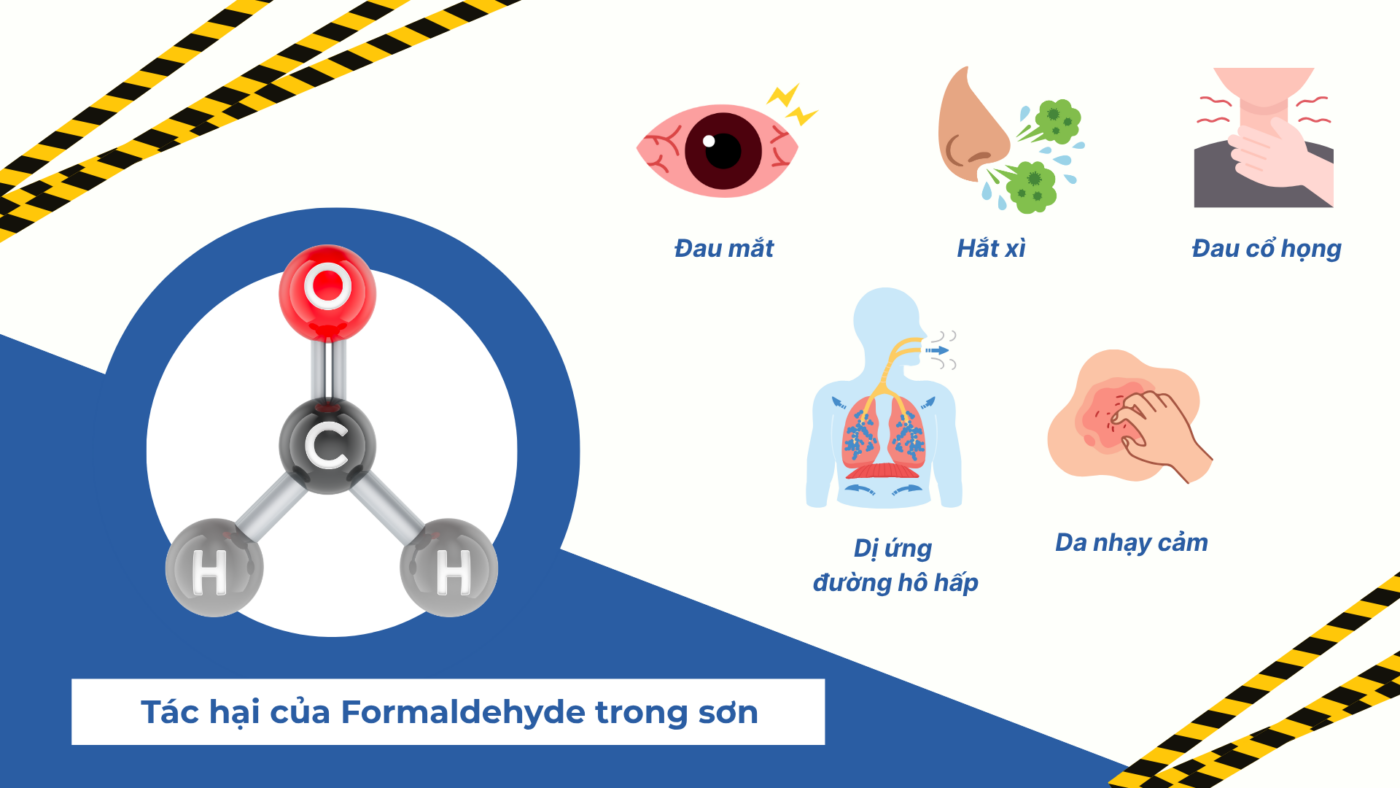
Formaldehyde is a substance that requires strict control, particularly in terms of exposure levels. Exposure to high concentrations or prolonged exposure may have adverse effects on health.
At certain exposure levels, formaldehyde may cause irritation to:
- The eyes
- The nose and throat
- The respiratory system
- The skin in some sensitive individuals
When formaldehyde concentrations in the air are high, exposure may cause discomfort, eye irritation, or respiratory irritation. This makes indoor air quality an increasingly important consideration, especially because we spend a significant amount of time indoors.
For this reason, today’s trend is no longer simply about choosing a coating that is beautiful and durable. It is also about choosing products designed to contribute to safer indoor air quality.
“A beautiful surface is no longer enough. Modern coatings should also be developed with a focus on minimizing unwanted substances and meeting appropriate safety and environmental standards.”
Formaldehyde-Free Paint: A New Trend in Next-Generation Coating Technology
Today, consumers are no longer asking only: “Does the paint look good?” or “Is it durable?”
They are also asking: “Is it safe?”, “Does it contain formaldehyde?”, and “Is it suitable for children and living spaces?”
These concerns are driving the paint industry to develop a new generation of coating products, particularly water-based paints, with a focus on reducing substances that may have an impact on human health and the environment.
However, it is important to note that not all water-based paints are automatically the same when it comes to safety. The formulation, raw materials, manufacturing process, and testing standards are the factors that ultimately determine the actual quality and safety performance of a product.

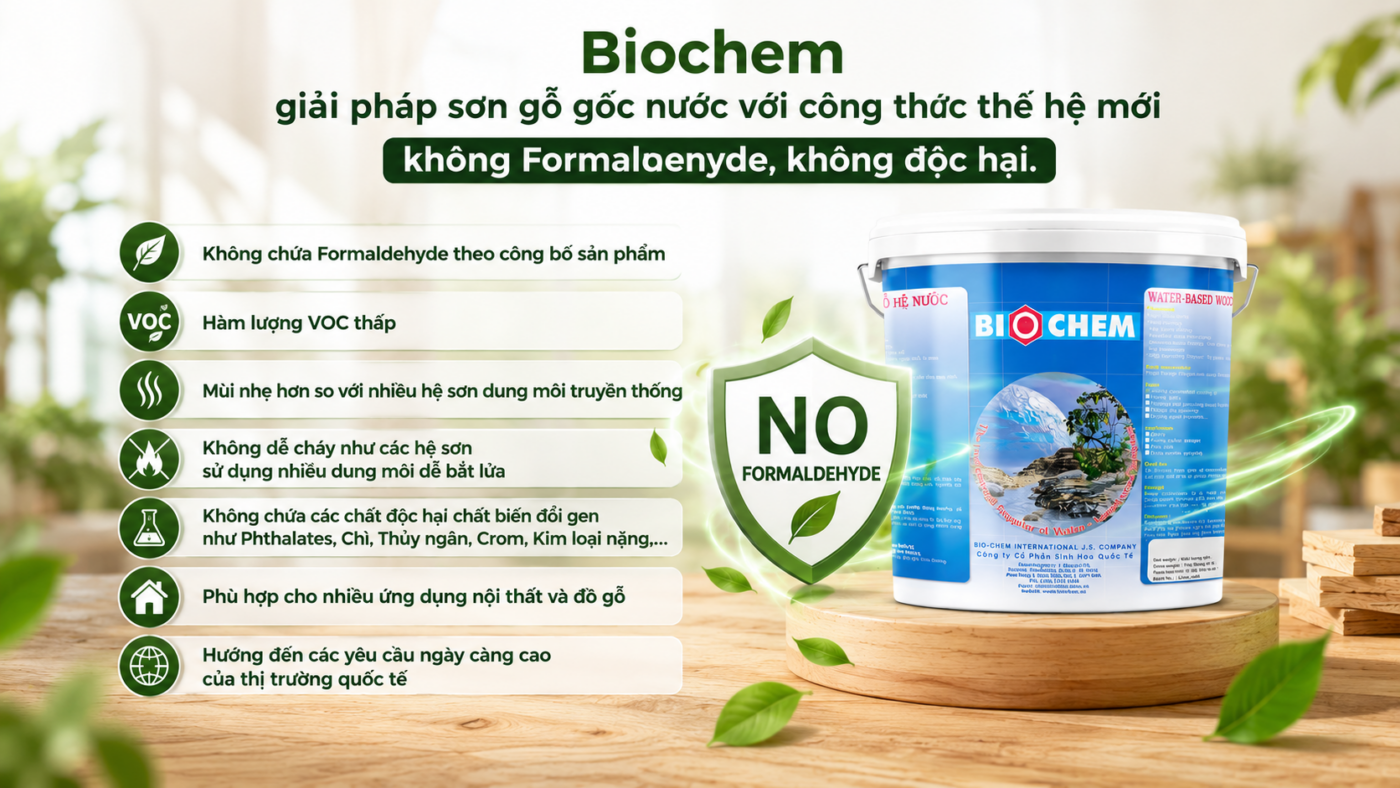
Biochem – Water-Based Wood Coating Solutions with Formaldehyde-Free, Low-Toxicity Formulations and Next-Generation Technology
Biochem is a wood coating brand developed with a focus on next-generation water-based coating technology. Biochem aims to create coatings that deliver not only aesthetics and durability but also meet higher standards for safety.
With more than 20 years of experience in the paint and coatings industry, Biochem focuses on developing water-based wood coating solutions with the following key features:
- Formaldehyde-free, as stated in the product declaration
- Low VOC content
- Lower odor compared with many traditional solvent-based coating systems
- Less flammable than coating systems containing high levels of flammable solvents
- Free from certain substances of concern, including phthalates, lead, mercury, chromium, and heavy metals, according to applicable product specifications and testing requirements
- Suitable for a wide range of interior and wood furniture applications
- Designed to meet the increasingly demanding requirements of international markets
The key to next-generation coating technology is not simply changing from “solvent-based paint” to “water-based paint.” It involves comprehensive formulation improvements to achieve a balance between:
Durability – Aesthetics – Application Performance – Greater Safety for Users and the Environment.
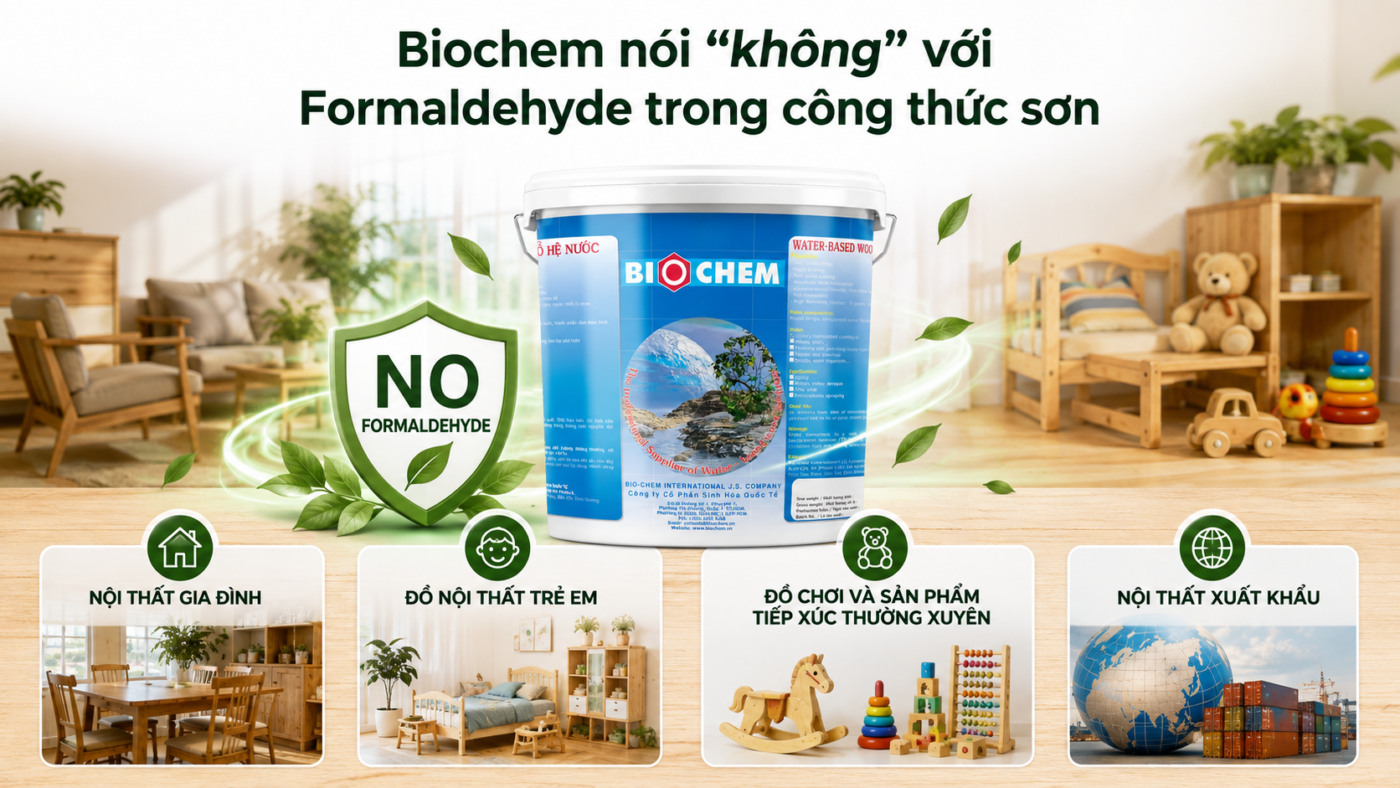
Biochem Says “No” to Formaldehyde in Its Paint Formulations
One of Biochem’s key development directions is creating wood coating systems with formaldehyde-free formulations. This helps eliminate another potential source of formaldehyde within the wood finishing system.
Beyond formaldehyde, Biochem also takes a proactive approach to limiting potentially harmful substances and heavy metals in its coatings. For Biochem, protecting the wood is only part of the goal. Protecting the health and well-being of the people who make, use, and live with these products matters too.
This is particularly relevant for applications such as:
Home Furniture
Tables, chairs, cabinets, beds, shelves, and other furniture used every day in enclosed spaces should be evaluated not only for appearance but also for the quality and safety of the materials and coatings used.
Children’s Furniture
Children may have prolonged and close contact with furniture and wood surfaces. Therefore, material safety has become an increasingly important consideration for manufacturers.
Toys and Frequently Handled Products
Chemical safety requirements for toys and products intended for children are becoming increasingly stringent, making it essential for manufacturers to select appropriate raw materials and coating systems.
Export Furniture
Many international markets have strict requirements regarding substances that may affect human health and the environment. Choosing a coating system with appropriate formulations, testing, and certifications can help manufacturers meet market requirements and confidently expand into international markets.
International Standards and Certifications – A Basis for Evaluating Product Safety
When choosing safer paint and coating products, consumers should not rely solely on marketing claims such as “green,” “safe,” or “non-toxic.”
More importantly, they should consider which standards and requirements the product has been tested and evaluated against.
International standards and certification systems related to indoor air quality, chemical emissions, and limits on hazardous substances can provide an important basis for evaluating product safety and performance. Biochem is committed to meeting international requirements and standards such as:
- GREENGUARD Gold
- CPSIA
- REACH
- EN 71-3
- TÜV Food Safe Contact
Each standard and certification has its own scope, criteria, and testing methods. Therefore, businesses and consumers should check the specific certifications applicable to each product line, rather than assuming that a single certification represents every safety or performance characteristic of the product.

Biochem – Water-Based Wood Coatings for the Future of Modern Interiors
Formaldehyde is not the only factor to consider when choosing interior finishing materials. However, it is one of the substances that requires careful control. VOC levels, heavy metals, and other chemical components are also important factors that should be evaluated based on each product’s formulation and applicable testing standards.
With a focus on next-generation coating technology, Biochem develops water-based wood coating solutions formulated without formaldehyde, as stated in the product declaration. Biochem coatings feature low VOC content and proactively control substances of concern in their formulations.
This approach enables Biochem to deliver not only durability, aesthetics, and effective protection for wood surfaces, but also solutions aligned with the growing focus on material safety, indoor living quality, and international market requirements.
When choosing coatings for wood furniture and interiors, don’t look only at color or gloss. Consider the formulation, ingredients, and standards behind the coating as well. Because a high-quality coating does more than enhance the beauty of a product—it can also contribute to creating a more reassuring and comfortable living environment.
Biochem – Next-generation water-based wood coatings, developed for high-performance surfaces and higher safety standards.

FAQ – Frequently Asked Questions About Formaldehyde in Paint
What is formaldehyde in paint?
Formaldehyde is a chemical compound that may be associated with certain raw materials, resins, or manufacturing processes. In interior environments, formaldehyde can also come from various other sources, such as adhesives, MDF, HDF, plywood, and other materials.
Is formaldehyde harmful?
Exposure to formaldehyde at certain concentrations may cause irritation to the eyes, nose, throat, and respiratory system. Therefore, formaldehyde levels should be carefully controlled in products and indoor environments.
Does water-based paint contain formaldehyde?
Not all water-based paints are formulated the same way. It is important to check the formulation, technical documentation, and test results of each specific product. Biochem water-based coatings are formulated without formaldehyde and other substances of concern, as stated in the product declaration.
Does Biochem paint contain formaldehyde?
According to its product formulation and declaration, Biochem develops water-based wood coatings with a formaldehyde-free formulation, while also focusing on low VOC content and safer applications.
Furthermore, Biochem follows a “3 NOs” approach: No heavy metals, no genetically modified substances, and no substances considered harmful to users, in accordance with applicable product specifications and testing requirements.
Is formaldehyde-free paint a better choice for interiors?
Reducing or eliminating a potential source of formaldehyde from the coating is an important factor to consider. However, evaluating the overall safety of an interior environment requires looking at the entire material system, including wood panels, adhesives, binders, and other materials that may contribute to formaldehyde emissions.
Biochem – Next-Generation Water-Based Wood Coatings.
Beautiful surfaces. Aiming for safer living spaces.