Tiếng Việt
News
Affordable Wood Coatings – A Survival Equation for Wood Manufacturers Today
What does “cost-effective wood coating” really mean in today’s market? Recently, nearly all input costs have increased. Fuel prices are rising, raw wood materials are more expensive, transportation costs continue to climb, and labor costs are increasing as well. As a result, profit margins for furniture manufacturers are becoming increasingly tight.
Under this pressure, many businesses have begun searching for cost-effective wood coatings as a way to rebalance production expenses. However, if the focus is placed solely on “low price,” manufacturers may unintentionally increase the risk of surface defects, rework, and long-term reputational damage.
So how can manufacturers secure competitive pricing while still ensuring consistent quality and production efficiency?
1. Where Does Cost Pressure Come From?
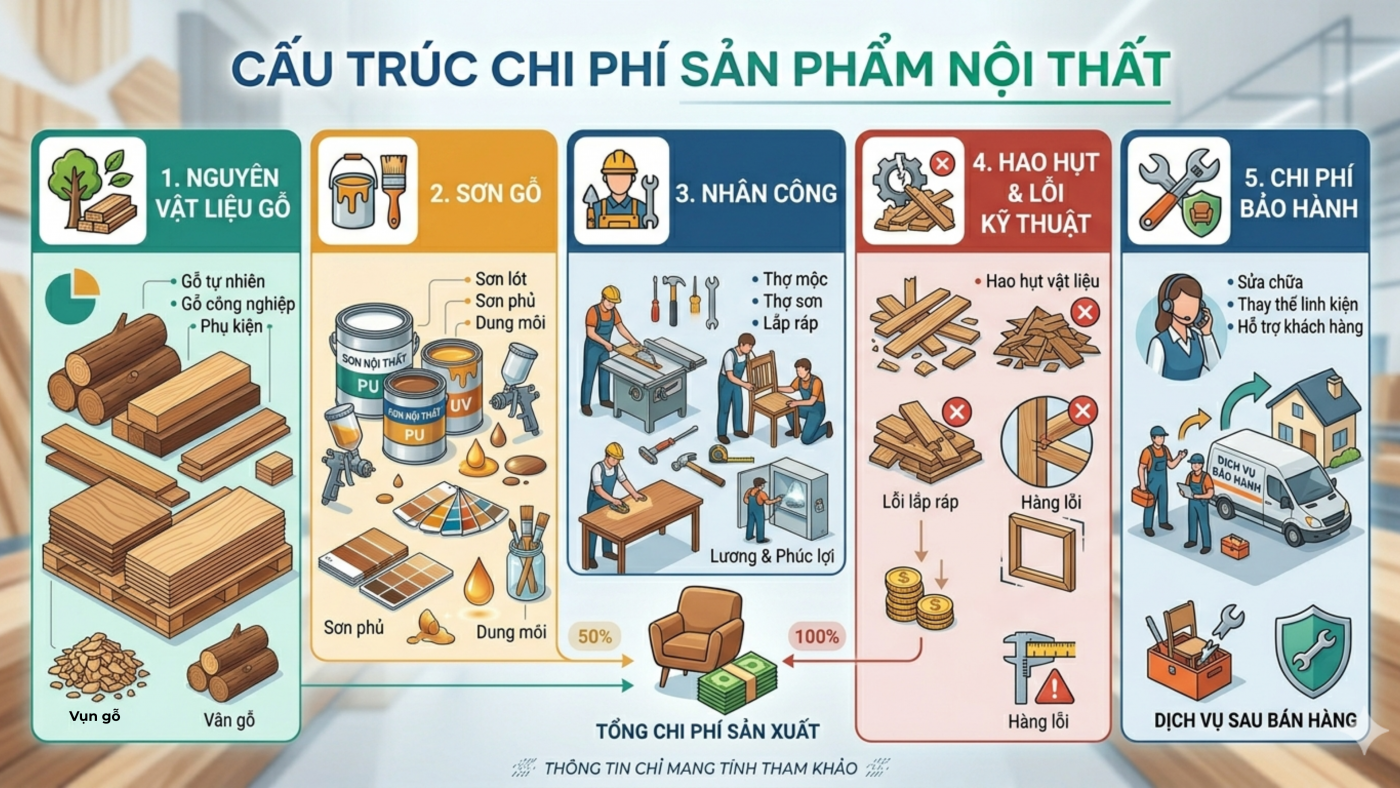
A typical furniture product includes the following cost structure:
- Raw wood materials
- Wood Coatings
- Nhân công
- Waste & technical defects
- Warranty costs
Wood finishing systems account for a significant portion of total cost, especially for multi-layer coatings or high-end surface requirements.
This is why many factories search for:
- affordable wood paint
- low-cost industrial wood coatings
- bulk wood coating pricing
However, comparing price per drum or per kilogram without considering coverage efficiency often leads to misleading cost evaluations.
2. Affordable Does Not Mean Cheap
A truly cost-effective wood coating system should meet three key criteria:
A/ High Coverage Efficiency
Good hiding power reduces the number of required coats, lowering:
- Spraying time
- Energy consumption for drying
- Nhân công
- Coating consumption per m²
✔ Reduced Surface Defects
Unstable coatings may cause:
- Bubbles
- Orange peel texture
- Sagging
- Uneven color. yellowing (especially with white or light-colored finishes)
The cost of rework often exceeds the initial price difference.
✔ Batch-to-Batch Consistency
For project-based or export furniture, color and performance consistency are critical. Stability across production batches is a non-negotiable factor.
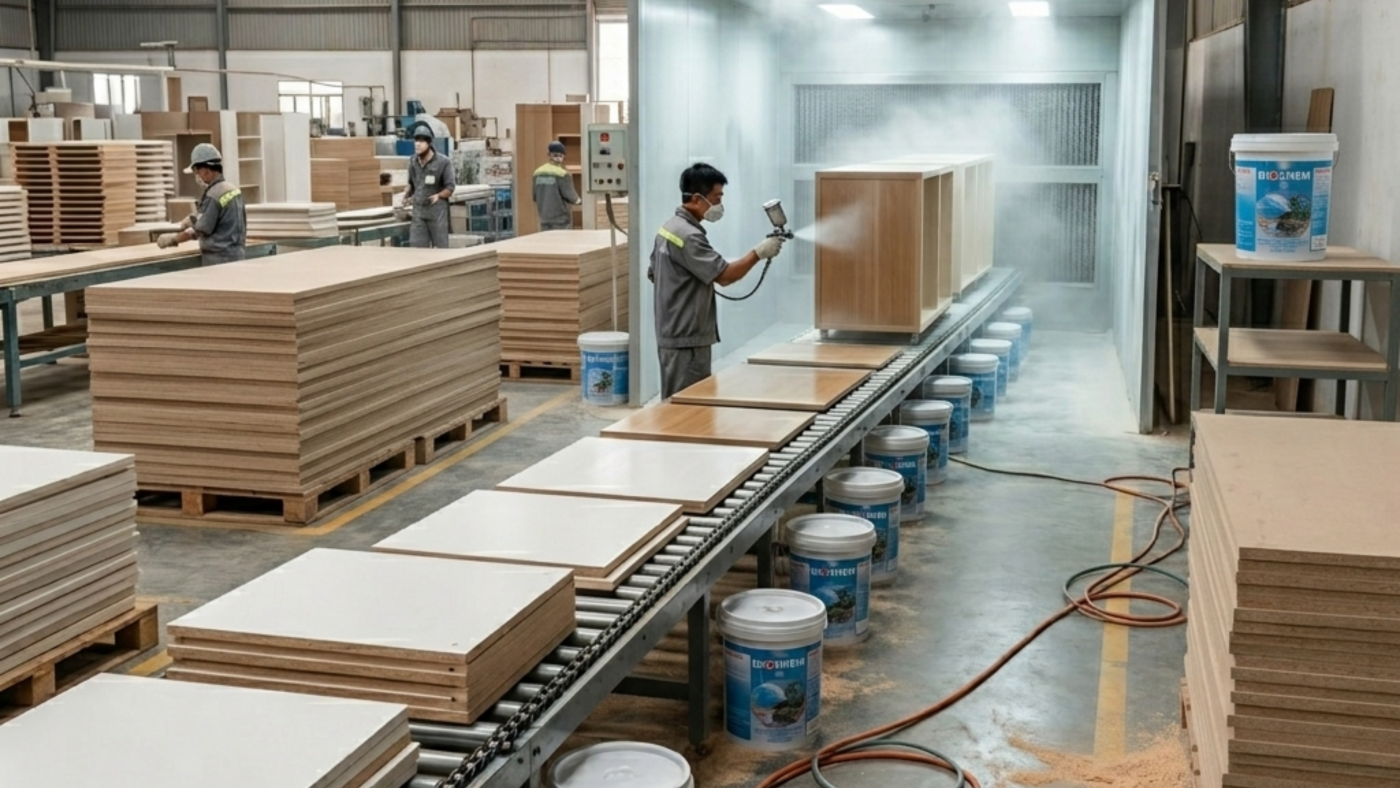
3. Common Mistakes When Choosing Low-Price Coatings
Many manufacturers:
- Compare price per drum instead of cost per finished m²
- Skip adhesion testing on MDF or solid wood
- Do not test coatings on actual production lines
- Overlook defect handling costs
- Fail to inspect incoming wood substrate (white wood) before finishing
These mistakes can increase total production cost despite lower initial purchasing prices.
4. How to Calculate “Real” Cost-Effectiveness
Instead of asking: How much is one drum of wood coating? You may ask:
- How many m² can 1 kg cover?
- How many coats are required for proper hiding?
- What is the average defect rate?
- Is there technical support when issues arise?
When calculated per finished square meter, many stable industrial wood coating systems are actually more economical than ultra-low-priced alternatives.
5. A Sustainable Solution for Wood Factories
A suitable coating system should:
- Work well on solid wood, MDF, melamine, rattan, and bamboo
- Be compatible with existing production lines
- Provide stable color consistency
- Optimize the number of coating layers
- Offer competitive pricing for bulk orders
Rather than choosing the cheapest coating, factories should look for a long-term partner who provides technical consultation and cost optimization per product line. Technical teams from experienced suppliers can inspect coating quality, evaluate incoming white wood materials, and ensure substrates meet finishing standards before entering the production line.
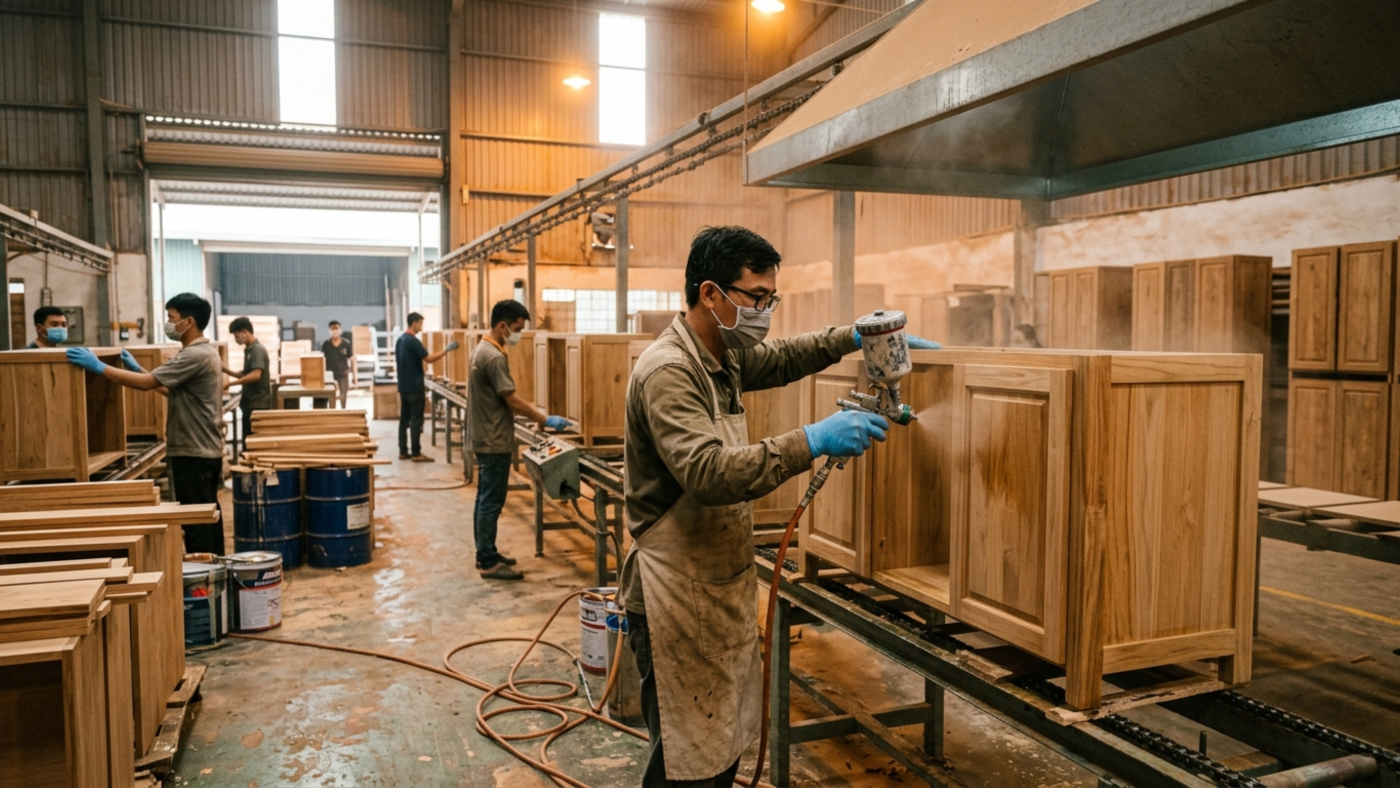
Biochem – The Cost-Effective Wood Coating Partner You’ve Been Looking For
In today’s market, nearly all input costs are rising: fuel prices are increasing, raw wood materials are becoming more expensive, transportation costs are going up, and labor costs continue to climb. As a result, profit margins for furniture manufacturers are becoming increasingly narrow.
Under this pressure, many businesses have begun searching for cost-effective wood coatings as a way to rebalance production expenses. However, if the focus is placed solely on “low price,” manufacturers may unintentionally increase the risk of surface defects, rework, and long-term reputational damage.
So how can manufacturers choose cost-effective wood coatings while still ensuring consistent quality and optimal production efficiency?

Frequently Asked Questions about affordable wood coatings
Is low-cost wood coating suitable for export products?
Not without proper durability and consistency testing. Export markets require strict quality standards, and return risks are significant.
How can I determine if a coating is truly cost-effective?
Calculate total finishing cost per m², including consumption rate, labor, and defect handling.
Should I choose water-based or solvent-based coatings to save costs?
It depends on your product segment. Some water-based systems can reduce long-term costs by improving workplace safety and production stability.
Conclusion
The equation of affordable wood coatings is not about choosing the lowest price — it’s about optimizing total cost and ensuring long-term stability.
For wood manufacturers, selecting the right coating system increases profitability, reduces risk, and strengthens credibility with customers.